Saturday, November 30, 2013

An Aspiration

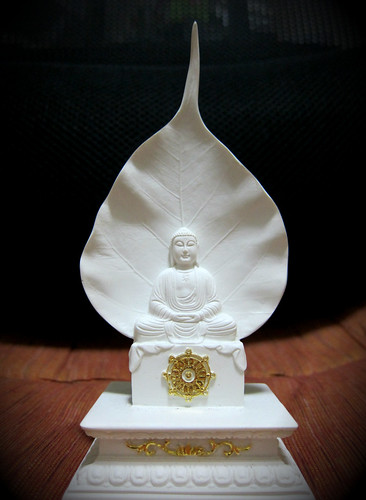
20130519-Vesak-6185_by Kelvin Cheuk-Web

BECOMING A BUDDHA is not so difficult. A buddha is someone who is enlightened, capable of loving, and forgiving. You know that at times you're like that. So enjoy being a buddha. When you sit, allow the Buddha in you to sit. When you walk, allow the Buddha in you to walk. Enjoy your practice. If you don't become a buddha, who will?
-- Thich Nhat Hanh

Enjoy your practice. If you don't become a buddha, who will?

These words struck a chord with me since I read it some weeks ago. It also connected with thoughts and feelings I had after my retreat in Hong Kong some months ago.

On the bus trip to the airport, I met a Filipino lady who had also attended the retreat and so we sat together for the long ride. Much of what we talked about had faded but I was left with a curious interest about the Order of Interbeing (OI).

In looking into the topic of sangha building some days ago with the community present, I chanced on a casual conversation about how aspirants join the OI, and listened. The topics seemed to 'click' for me: sangha building and OI.

While sending the monastics home, there was no specific theme in the conversations and yet another monastic spoke of his hopes to see aspirants from Singapore so that by next year these aspirants could attend the retreat and become OI members.

These events somehow spoke to me. The contributing factors occurred much earlier in life. One might call it a divine culmination of factors, some might call it a calling.


Thursday, November 28, 2013

Community Building

IMG_4905
This is a summary cum reflection after a gathering today with my community of practice in mindful living.

"The Sangha is the community that lives in harmony and awareness"

This is a profound definition, because it put many concepts in a different perspective for me. 

Firstly that the community is a living community, in that it needs to be supported with material resources in order to continue. Sometimes we shy away from asking for such resources and that might lead to the community withering away.

A community is like a body made up of different organ systems which can be further broken down to cell level. Each individual cell knows its task and yet works well with other cells, such that they specialize in some form, for example, in a liver or heart. Other systems such as the autonomic nervous system keeps everything running. The body only lives well when all parts work together and each part is healthy.

Secondly, that harmony is only one wing that needs the other wing of awareness in order to carry the sangha towards a common direction. When there is only harmony, the community may grow towards an unhealthy state of being. Without awareness within the sangha, the harmony can also quickly weaken.

When one or a few persons are faced with problems of the sangha, they may choose to manage it on their own. In the long run, they may feel burdened and burned out. When such problems are shared and made aware to the sangha, the problem comes to its proper place for the sangha to examine. There is then wonderful opportunity for the sangha body to grow by experiencing big and small adversities together. The sangha needs the mud in order to bloom like a lotus.

Perhaps the essential element that unites the sangha body is practice, akin to the autonomic nervous system lying beneath consciousness that controls critical functions such as breathing. Without regular practice together how would harmony and awareness be present.

Conversely if some chose not to share the same practices, then it becomes difficult for them to remain as part of the sangha body. And if we decided to share the same practices, then we can and should make use of the richness of these practices to benefit ourselves and others.

"Dwelling in the refuge of the Sangha, shining light that supports me, keeping my practice free of obstruction."

"Taking refuge in the Sangha in myself, I aspire to help all people build fourfold communities, to embrace all beings and support their transformation."


Wednesday, November 27, 2013

What the Buddha Taught

20130527-HKColiseum- Martin Lam-Web

FOR FORTY-FIVE years, the Buddha said, over and over again, "I teach only suffering and the transformation of suffering." When we recognize and acknowledge our own suffering, the Buddha -- which means the Buddha in us -- will look at it, discover what has brought it about, and prescribe a course of action that can transform it into peace, joy, and liberation. Suffering is the means the Buddha used to liberate himself, and it is also the means by which we can become free.

-- Thich Nhat Hanh

Monday, September 9, 2013

Continuation

IMG_4803
My paternal aunt passed away last week from the effects of pancreatic cancer. She was visibly in pain but she requested to return home to be with family rather than stay at the hospital. She was bedridden and mostly laid on her side due to pain. 

Despite this she was described to be alert and communicated well till her last breath. She remained fully conscious of her body and made a final action to lie straight in bed, clasp her hands, and let the breath depart. 

She left a graceful sign for those who witnessed it.  

Grace in the face of death is fearlessness, knowing there is no death.
 
"I am the resurrection and the life; whoever believes in me, even if he dies, will live, and everyone who lives and believes in me will never die."
-- John 11: 25-26

"When conditions are sufficient things manifest." 
"When we understand that we cannot be destroyed, we are liberated from fear." 
"Walking slowly in the moonlight through the rows of tea plants, I noticed my mother was still with me." 
"Just because we do not perceive something, it is not correct to say it doesn’t exist."
-- Thich Nhat Hanh

Wednesday, August 28, 2013

Battefield with Pain

IMG_4806 
There is no intention to fight or to suppress.
You are your mindfulness but you are also your pain.
We should not transform our self into a battlefield, the good fighting the evil. 
That's not the practice.
-- From Thich Nhat Hanh's dharma talk held on August 26th, 2013 at Blue Cliff Monastery, Pine Bush, NY.

Another realization of how difficult it is when one is ill. We're so used to being in control of our lives and when illness comes we fight it. The fight response is so natural and socially accepted. When learning to embrace it we are often confused and feel we are going the other way, that is, flight. Then we think we're defeated and emotions go downhill.  Our mind tends to be dualistic on many levels: me vs. illness, fight vs. flight, win vs. lose.


Monday, August 26, 2013

Formations


DSC_5665

Fresh from a shower the beautiful twilight sky is filled with swallows darting and feasting away.
My little dog pees, walks, and sniffs away, unperturbed.

It's interesting humans have this capacity to appreciate the various external forms and internal feelings going on about us. Likewise this capacity also gets us into a mess when things do not go smooth in life.

A simple bout of flu can be a big thing for me as my sinus gets easily infected and makes it a long tedious road to recovery. My work plans are derailed, my time is spent cooped up at home. I feel aches, heavy headed, limp, clouded. Anger is easier to spark off and there is hesitation to communicate. Bad habits start to surface such as watching Youtube for hours aimlessly.

So how has the practice of mindfulness helped me? Foremost, I am better able to watch these feelings and realize it's not very practical in aiding recovery. I think this watching is very different from my past response which unknowingly lets the mind go astray. There is a quicker turn around to get back to the business of rest and recovery.

I am also better at observing which parts of the body need attention. I can better keep anger in check by not speaking and I can pull away from that long running TV drama on Youtube. It takes a while to return to my body with its present ill state so hopefully with practice I can better smile at suffering.


Reminders from the Five Mindfulness Trainings:

When anger is manifesting in me, I am determined not to speak.

I am determined not to try to cover up loneliness, anxiety, or other suffering by losing myself in consumption.

Wednesday, August 7, 2013

Effortlessness


IMG_4775a
When you sit and watch television, you don't make any effort. That is why you can sit there for a long time. When you sit in meditation, you struggle a lot, and that is why you cannot sit for very long. Please imitate the way you sit in the living room. Effortlessness is the key to success. Don't fight. Don't try hard. Just allow yourself to sit. This relaxing way of sitting is also resting. Allow your body to rest.

When you pour fresh juice into a glass and let it stand for fifteen minutes, all the pulp and particles sink down to the bottom of the glass. If you allow your body to sit in a relaxing, peaceful way, it calms your body and also your mind. Sitting like this allows you to enjoy your in-breath and out-breath, to enjoy being alive, to enjoy sitting here. To enjoy your in-breath and out-breath is a miracle, the miracle of being alive.

-- from "The Path of Emancipation" by Thich Nhat Hanh